
All the uses of porcelain stoneware at home: why choose technology, strength and design

Porcelain stoneware is now one of the most advanced and versatile surfaces in contemporary design. Originally created as a technical flooring material, it has won over architects and interior designers thanks to its ability to adapt to any project.
It is a cross-functional furnishing material suitable for multiple uses, capable of covering, protecting and enhancing every area of the home with natural elegance.
Its strength lies in the combination of technology, aesthetics and durability: an accessible yet high-quality material, long-lasting and suitable for countless applications. Floors, walls, kitchen countertops, washbasin tops, cabinet doors or tables: porcelain stoneware molds itself to the designer’s vision, offering a wide range of sizes, textures and thicknesses that expand expressive possibilities.
Stoneware thicknesses: balance between lightness and strength
One of the main advantages of porcelain stoneware is its structural modularity. It can be produced, installed and combined according to regular modules, enabling great aesthetic and functional flexibility. The latest-generation surfaces are produced in thicknesses ranging from 3 to 20 mm, allowing tailor-made solutions for every need.
• Ultra-thin thicknesses (3–6 mm) are perfect for vertical cladding, cabinet doors, boiserie and decorative panels, where lightness and precision are essential.
• Intermediate versions (9–12 mm) are the most versatile: ideal for floors and walls, as well as furnishing applications such as kitchen countertops, bathroom tops, integrated washbasins and tables, achieving an optimal balance between elegance and mechanical resistance.
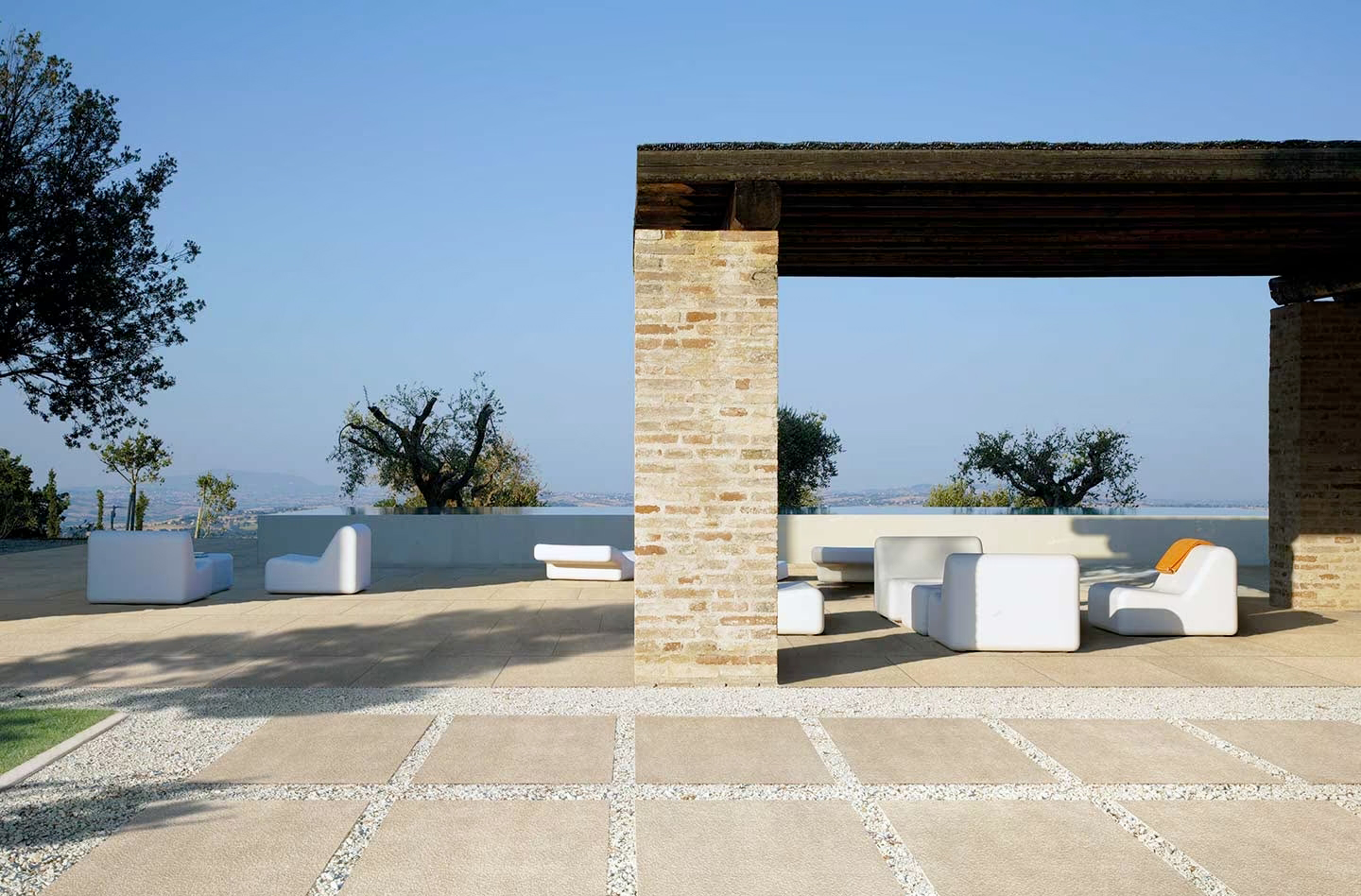
• The greatest thickness (20 mm) is used for staircases, self-supporting tops, kitchen countertops and outdoor areas, where solidity must coexist with surface beauty. Outdoor flooring with 20 mm thickness is designed for dry installation on grass, gravel, sand or raised supports.
This variety of configurations allows the creation of coherent and continuous environments, where each surface communicates with the others within a shared material language.
Porcelain stoneware in the kitchen: hygiene, performance and design freedom
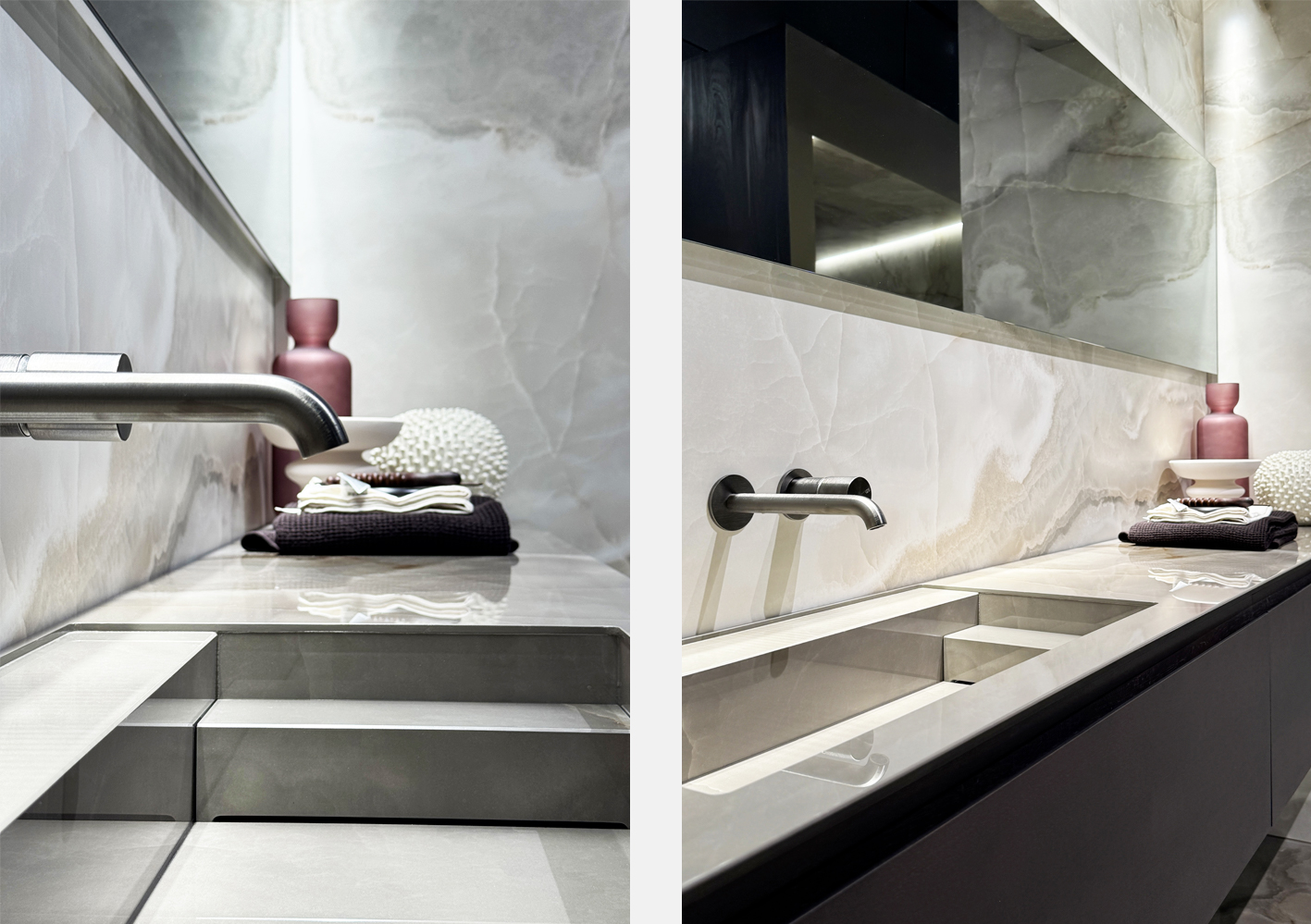
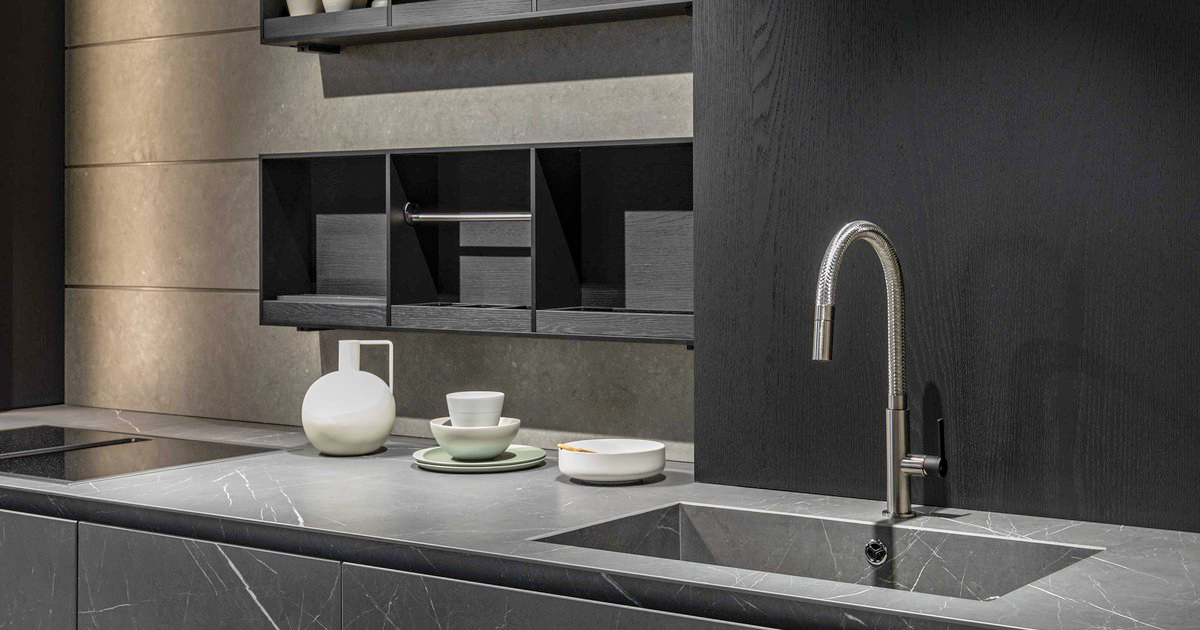
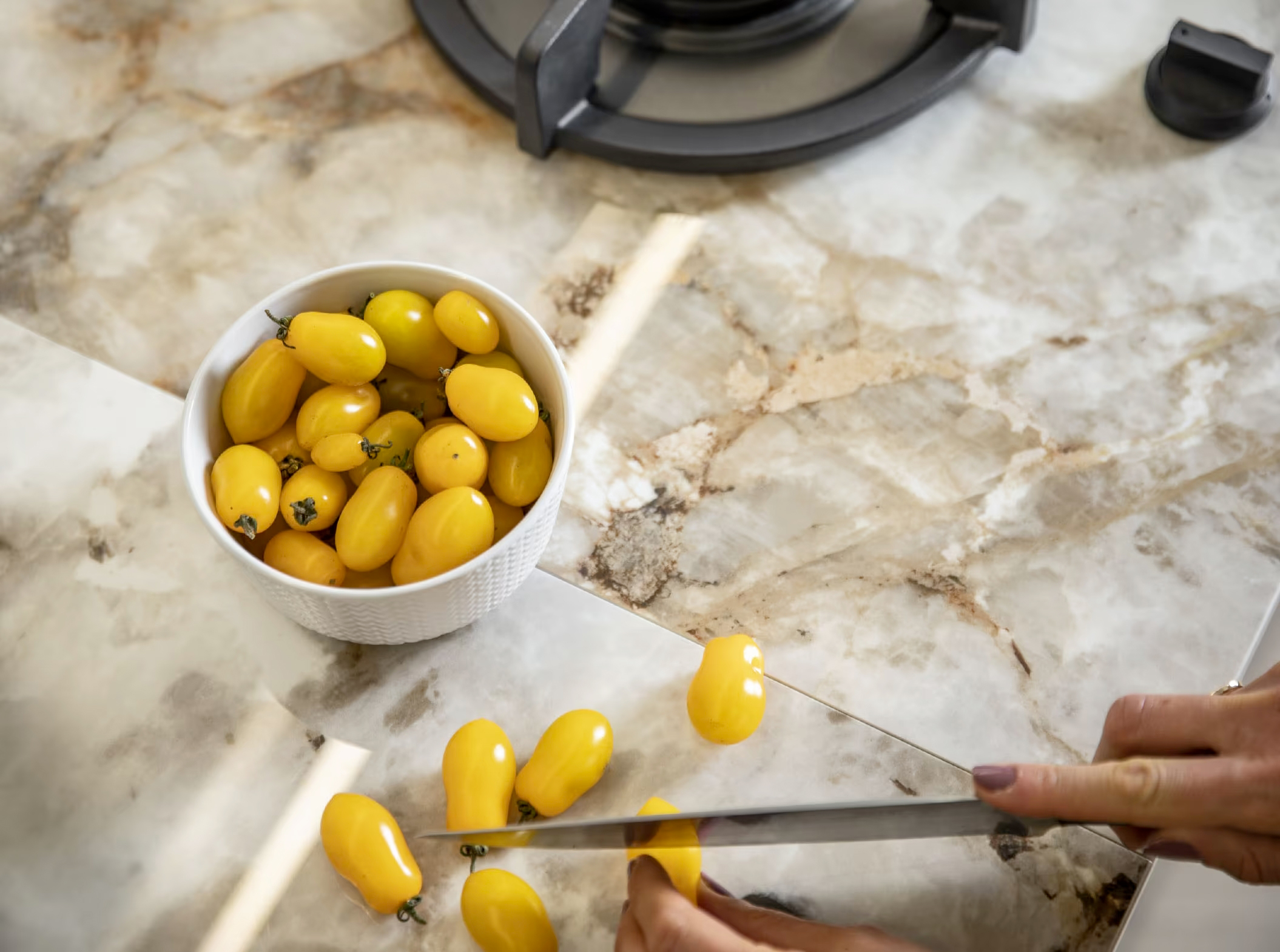
In the kitchen, porcelain stoneware combines aesthetics and functionality. Its compact, waterproof and scratch-resistant surface is perfect for everyday use. It is ideal for countertops and worktops because its absorption rate is practically zero, meaning it does not stain, does not absorb odors or bacteria, and is hygienic and safe. Porcelain stoneware is perfect for creating kitchen backsplashes and rear panels that match the countertop, as well as cabinet doors with the same texture.
It withstands aggressive detergents without fading or deteriorating over time. Tables and kitchen islands can also be made in porcelain stoneware, combining solidity, visual lightness and great design freedom.
Textures range from marble to stone effects, from concrete to metal. Each finish expresses a different idea of the kitchen: rigorous and technical, or warm and material. Porcelain stoneware responds to both, guaranteeing hygiene, durability and design freedom in a single surface.
Porcelain stoneware in the bathroom: art and well-being
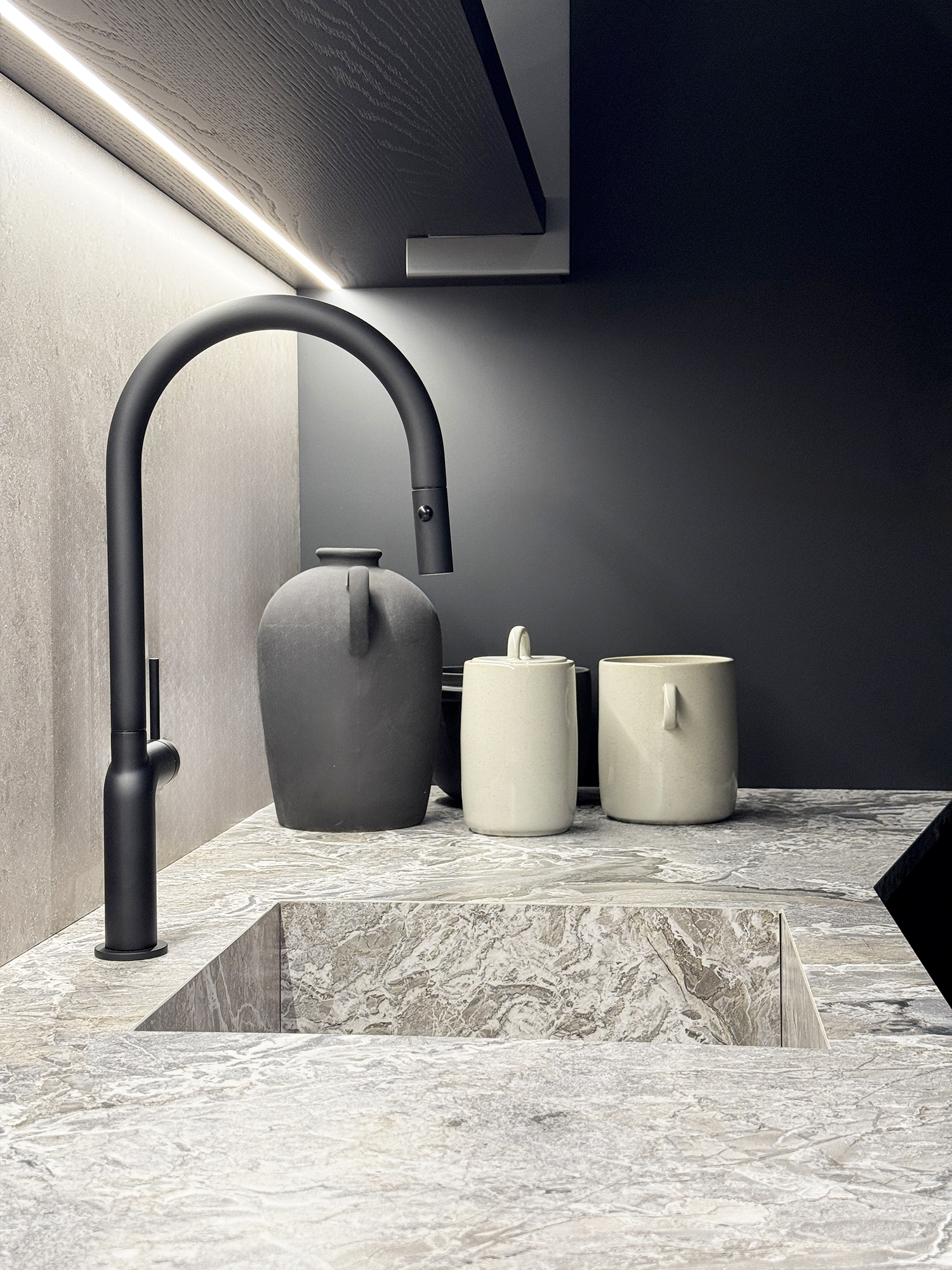
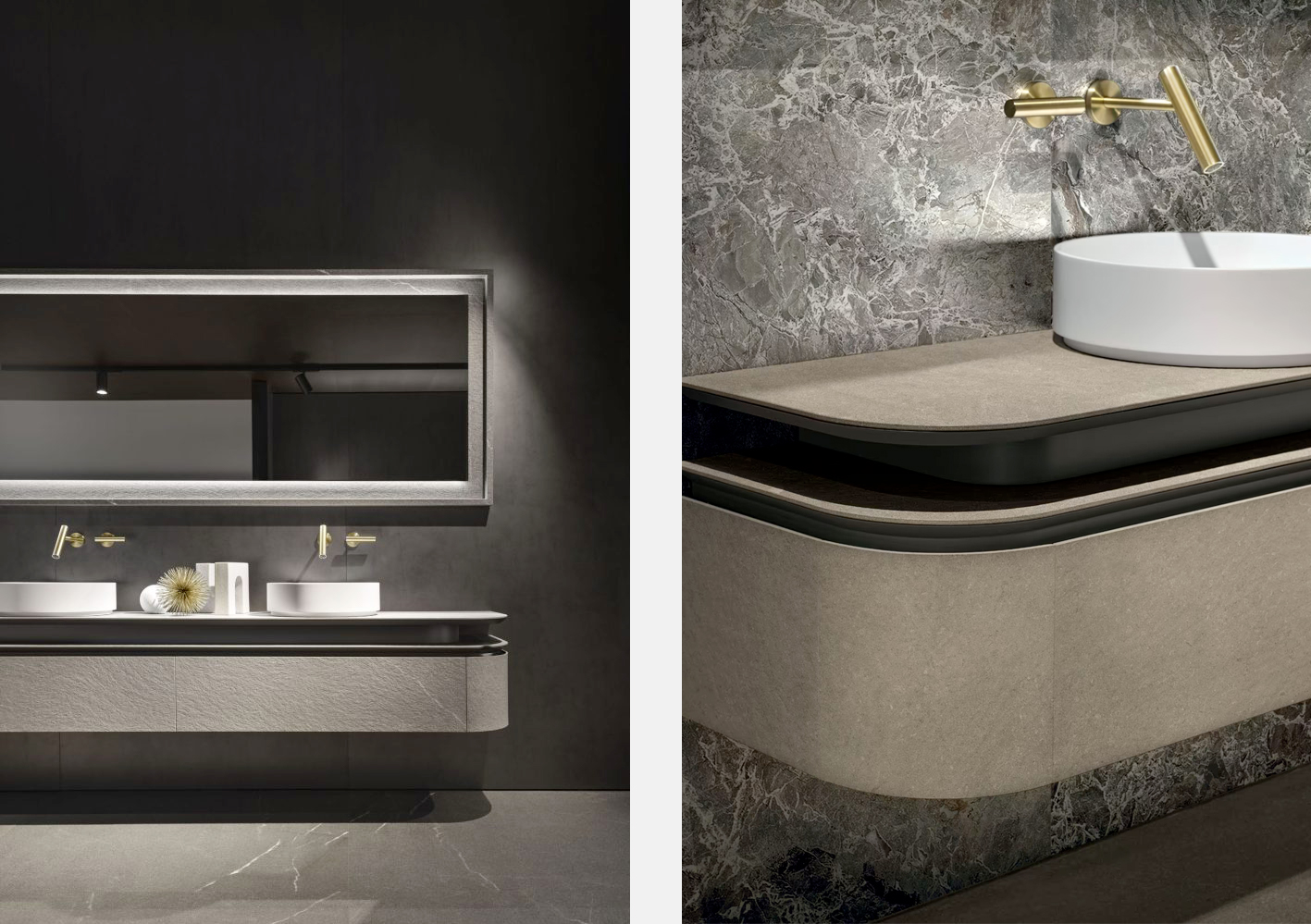
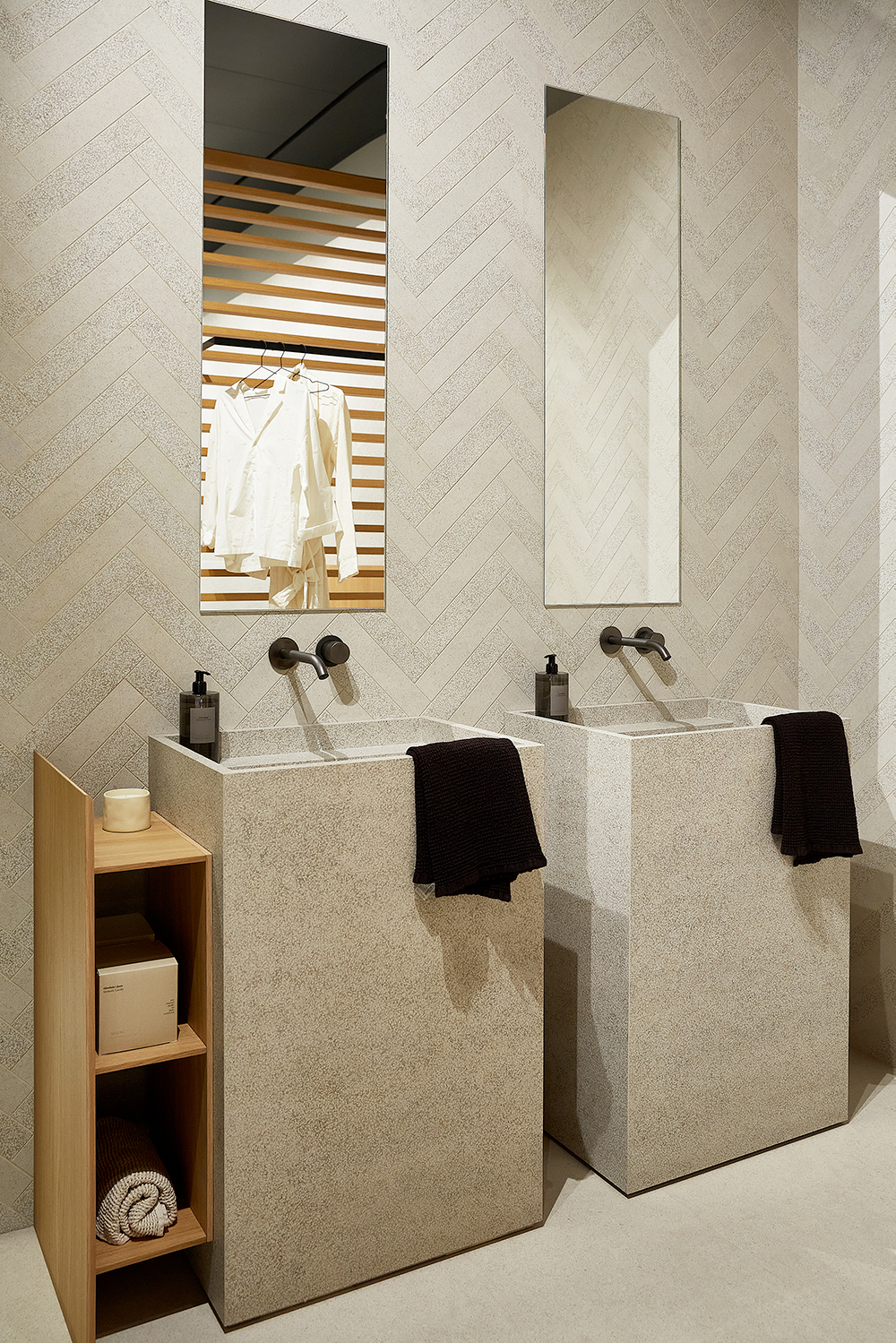
In the bathroom porcelain stoneware becomes a natural choice for those who seek harmony and resistance. Large slabs with minimal joints, for example, allow floors, walls, washbasin tops and shower trays to be covered consistently, creating a sense of order and continuity. It is a material that resists water, detergents and humidity, ensuring hygiene and minimal maintenance. A significant example of this philosophy is Elitique, a project born from the collaboration between Florim and Falper.
From the encounter between ceramic and wood emerges an integrated bathroom system in porcelain stoneware, where technology and craftsmanship coexist in balance. Elitique expresses an idea of a sensorial and refined space, where different materials converse with natural harmony.
From this perspective, porcelain stoneware is not only a surface, but a furnishing material capable of expressing naturalness, precision and innovation.
Wall and floor cladding: a seamless aesthetic of porcelain stoneware
Porcelain stoneware makes it possible to achieve perfect visual continuity between floors and walls, enhancing the perception of space and natural brightness. Choosing large-format slabs reduces joints and amplifies the purity of surfaces, enabling homogeneous and well-proportioned environments. Decorative walls, architectural partitions and porcelain stoneware boiserie introduce a new design language: surfaces that define space, reflect light and add depth. Three-dimensional finishes and stone or metal effects add personality without losing sobriety, transforming the material into a true furnishing element.
Furniture and accessories: ceramic that decorates
Technological research has made porcelain stoneware an ideal material for furniture production. Tables, cabinet doors, decorative panels and counters can be made with thin or thick slabs that retain color and texture over time. Tailor-made cutting and shaping allow for infinite interpretations: suspended tops, furniture cladding or customized architectural details.
The latest technologies ensure color and material uniformity throughout the thickness, giving the ceramic an authentic and natural look similar to quarried stone.
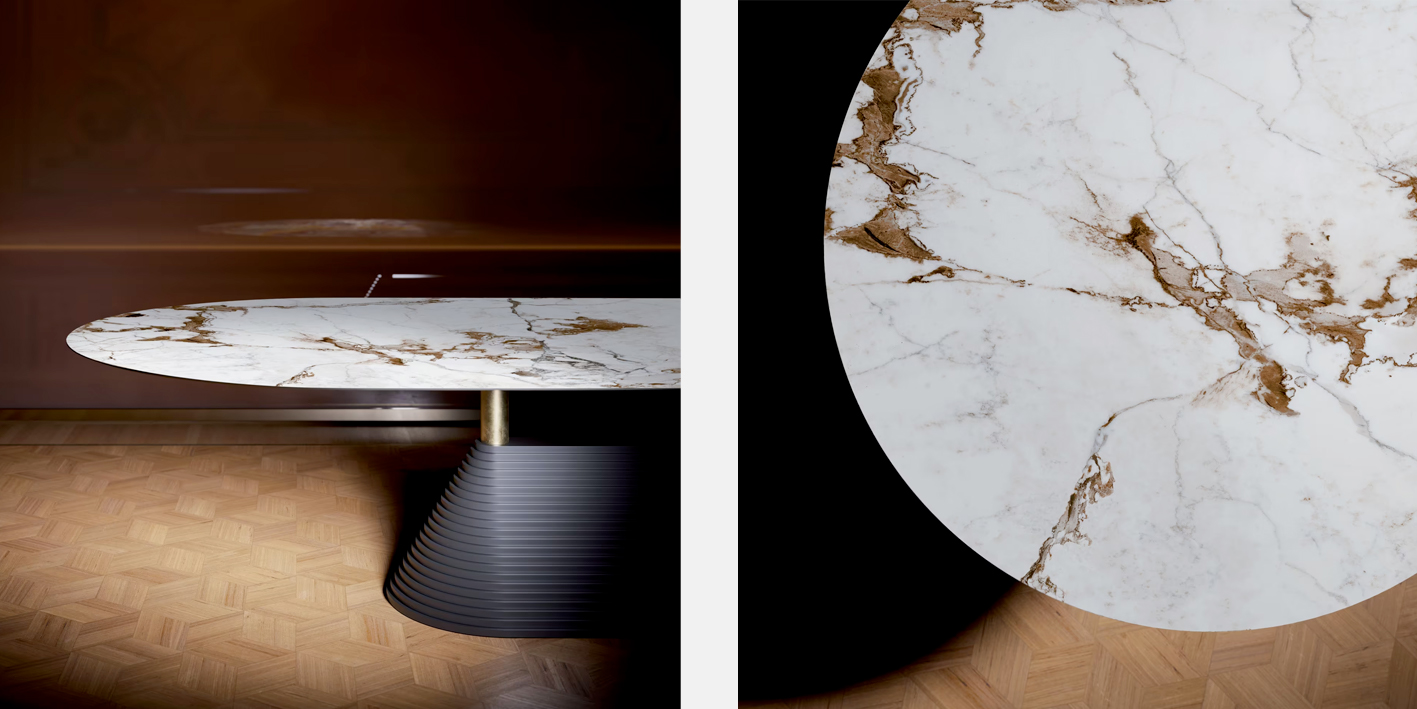
A perfect synthesis of advanced ceramic workmanship and scenic presence is the Komos table by Florim, which stands as a true functional sculpture.
Its conical support base, composed of ovoidal ceramic elements 20 mm thick, forms both body and structure.
The top rests lightly above the base, in the same finish or in chromatic contrast, interacting with light and space. Every edge and every joint is carefully designed because the Komos table is not simply a piece of furniture: it is a tactile and visual experience.
The allure of three-dimensional structured surfaces
Porcelain stoneware has moved beyond its identity as a technical material to become a true expression of matter and sensoriality.
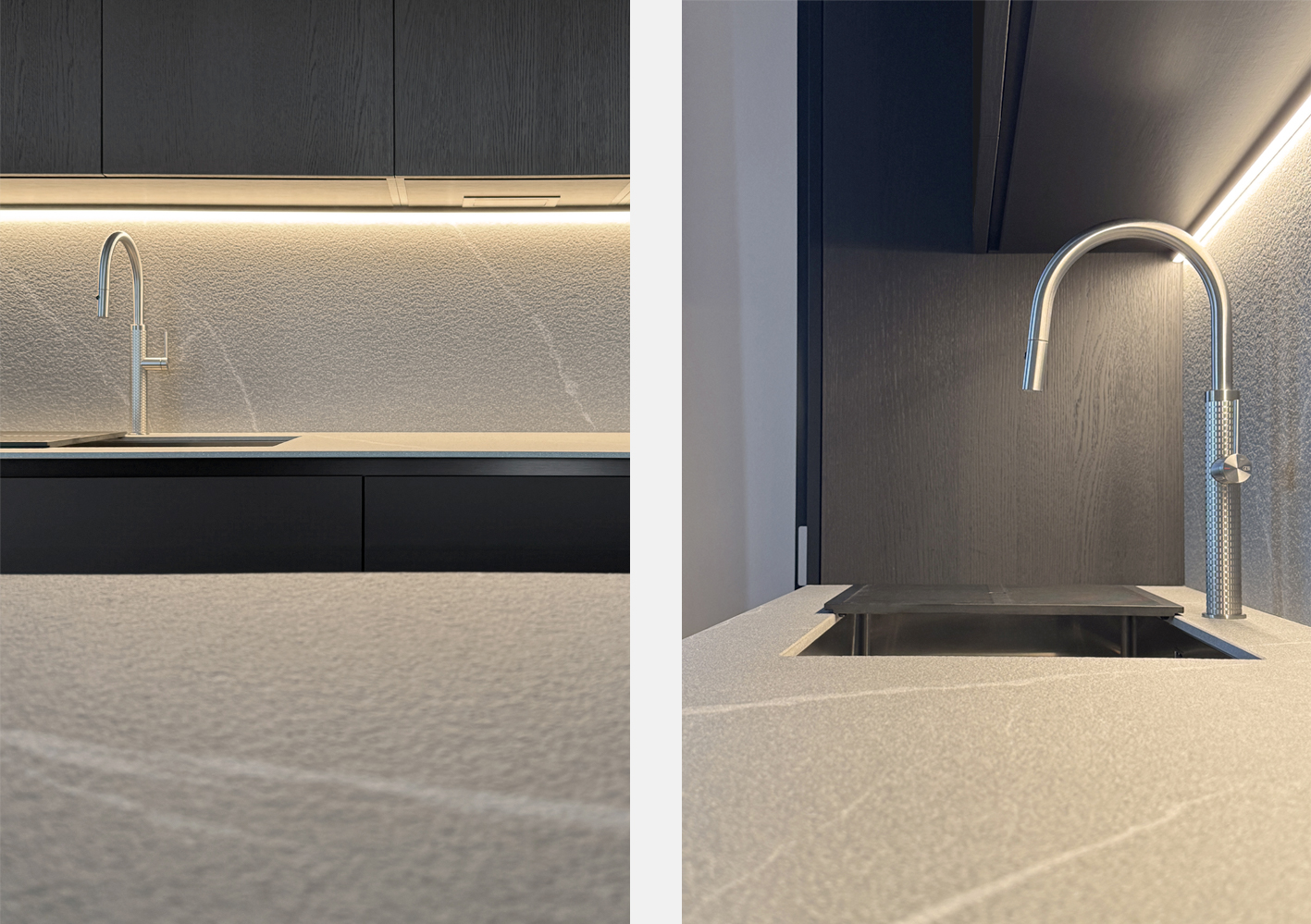
Today’s new structured surfaces reproduce not only the visual appearance of stone, concrete or wood, but also their tactile depth — that physical sensation that transforms a simple surface into an experience. Every streak, split or relief is perceivable exactly where it is seen. The surfaces become alive, authentic, telling the story of natural stones, industrial cements or oxidized metals, yet with the durability and resistance of porcelain stoneware.
Structured surfaces have a unique charm because they play with light and shadow. The micro-incisions and reliefs capture light irregularly, creating soft, natural reflections. An important example is found in flamed finishes, which reproduce the rough, irregular texture of stone worked through traditional artisanal techniques. In the Pietra Piasentina Fiammata collection by Laminam, this finish offers chromatic depth and intense tactile perception: light glides across the irregularities of the surface, enhancing the vitality of the material and its discreet elegance.
Outdoor: seamlessness and resistance
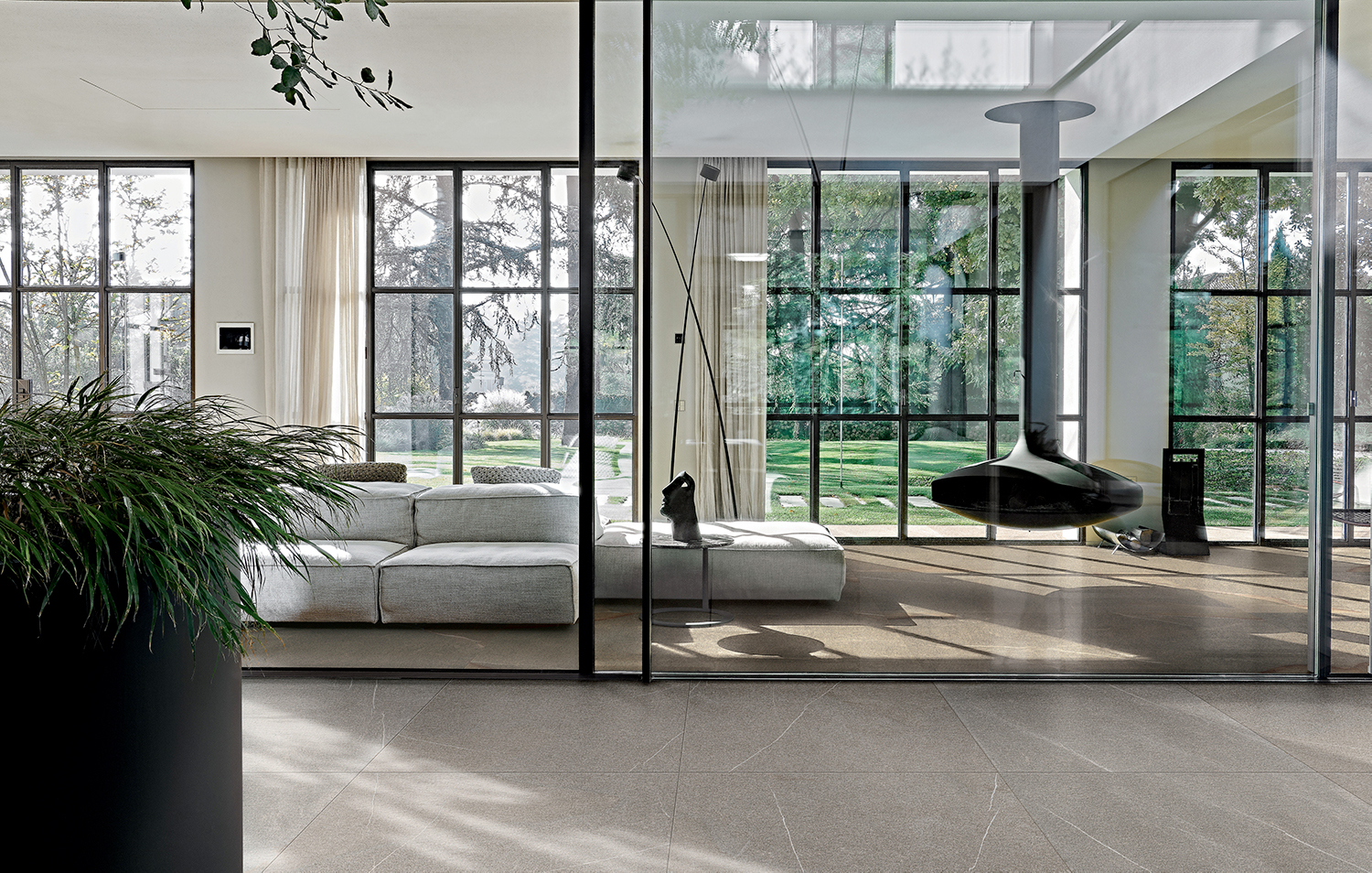
Thanks to its compact structure and non-absorbent properties, porcelain stoneware is also suitable for outdoor spaces.
It resists frost, UV rays and thermal shock, maintaining its color and material stability over time. Terraces, loggias and gardens can be finished with the same surfaces used indoors, creating visual seamlessness between indoor and outdoor spaces.
Porcelain stoneware with thicknesses from 9 to 12 mm is laid with traditional adhesive on screed. The advantages include quick installation, low costs and a lightweight structure. The 20 mm thickness, on the other hand, is designed for dry installation on sand, gravel, grass or raised structures. This thickness is ideal for high-traffic contexts and where high resistance to weather and frost is required.
The advantages of porcelain stoneware: technology, durability and sustainability
Porcelain stoneware is born from technology that combines research, performance and environmental respect. Made from natural raw materials and low-impact production processes, it is fully recyclable and maintains its characteristics unchanged for decades.
Among its main advantages:
• Mechanical and chemical resistance, including heat and aggressive detergents
• Impermeability and hygiene thanks to its non-porous structure
• Easy maintenance, requiring only water and neutral detergents
• A wide aesthetic variety, with finishes that reproduce wood, marble, stone and metal
• Sustainability and long lifespan, reducing waste and replacements over time
Bertani’s expertise: porcelain stoneware as a design language
Bertani guides architects, designers and private clients in choosing the most suitable surfaces for each project. Porcelain stoneware embodies the company’s values: technology, beauty and reliability, serving spaces designed to last.
Each environment takes shape through mindful planning that brings together technical expertise and aesthetic sensitivity. From thin slabs for wall coverings to solid kitchen tops, from custom furniture to outdoor solutions, porcelain stoneware becomes an integral part of a coherent architectural language.
Discover the full selection of porcelain stoneware surfaces at bertani.it and let our consultants guide you in designing your space.


